
NATO Senior Leader Seminar 2026: Advancing the Comprehensive Approach and Multi-Domain Operations in a Complex Security Environment
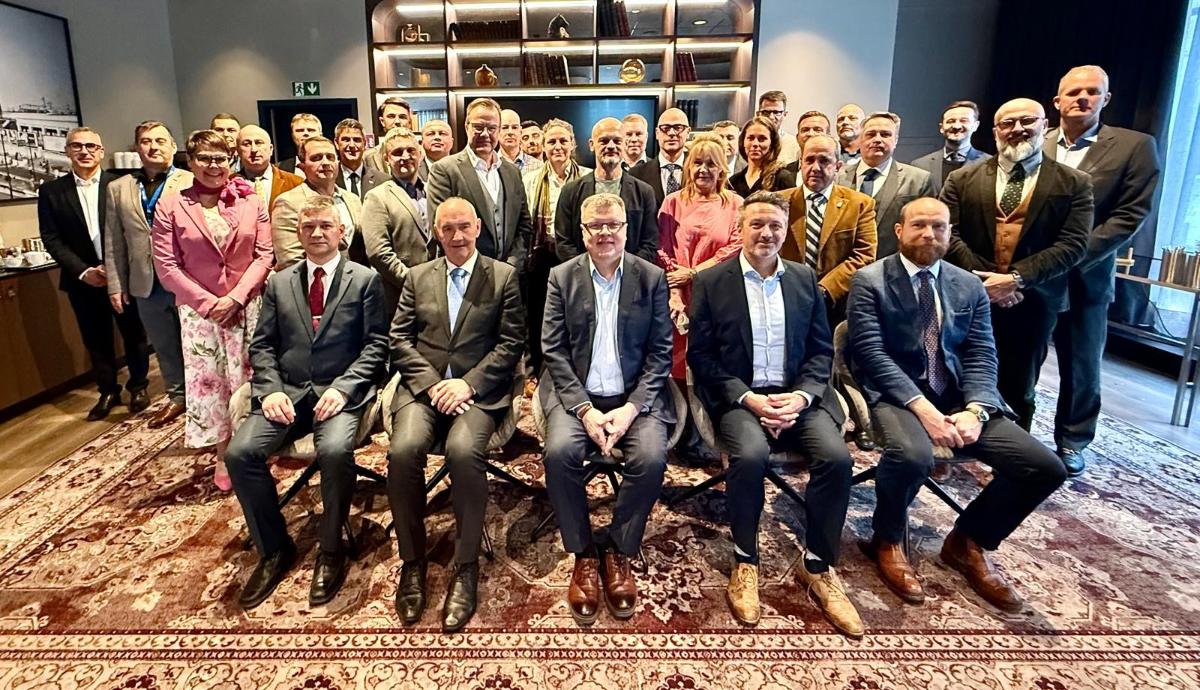
The fourth annual NATO Senior Leader Seminar (SLS) took place in Brussels from 14–16 April 2026, bringing together senior military and civilian leaders from across the Alliance. Building on the foundations laid in previous years, the seminar focused on adapting NATO’s Comprehensive Approach (CA) and Multi-Domain Operations (MDO) to the evolving security landscape, with particular emphasis on the challenges posed by developments in Europe and the Middle East. The SLS provided a platform for dialogue, trust-building and knowledge exchange, aiming to bridge the gap between strategic concepts and operational implementation.
Adapting the Comprehensive Approach to Evolving Threats
Lieutenant General (retired) Hans-Werner Wiermann emphasised that the Comprehensive Approach remains essential but must evolve to meet the requirements of collective defence. He pointed out that recent regional instability in Gaza, Lebanon, Iran and other areas underscores the importance of being prepared for stabilisation operations. In such contexts, the military instrument of power establishes the conditions necessary for the effective deployment of additional instruments of power.
“In the context of collective defence, we must leverage all instruments of power to optimise the effectiveness of the military instrument,” Wiermann explained. Civil-military cooperation is central to this, as it requires pre-established legislation and timely access to civilian resources to ensure credible deterrence against potential threats from Russia.
Closing the Implementation Gap
Wiermann noted that political ownership and coordination are critical to the success of the CA. Since the 2025 seminar, NATO has prioritised planning for collective defence, clarifying roles and responsibilities for civilian support. Measures include contracting provisions and national legislation to ensure that civilian capabilities effectively support military operations.
Tom Gooch, head of the Civil Liaison Branch at SHAPE J9, highlighted the progress made in operationalising these concepts. “The approval and ongoing implementation of the SHAPE J9 Trail Structure allows us to better respond to the DDA FoP needs. This includes the Analysis and Assessment Branch producing the White Picture, the initiation of the alignment of civilian and military planning, and the adaptation of liaison activities in line with the new Civil-Military Liaison Approach to facilitate the synchronisation of military and non-military actions.”
Multi-Domain Operations and Technological Innovation
The seminar also addressed the challenges and opportunities of Multi-Domain Operations. Wiermann pointed out that cyber and space domains are now routinely included in NATO Command Structure exercises, and that procedures are being developed to integrate third-party effects into operational and tactical plans. Key progress has been made with the deployment of the Maven Smart System (MSS), an AI-enabled command-and-control platform that enhances situational awareness and decision-making across all NATO operations.
Gooch noted that, while these developments mark significant progress, MDO and CA actions remain long-term initiatives. “These are not yet steady-state processes. Ongoing refinements and adjustments are needed to develop operationally valid CA and MDO actions,” he explained.
Enhancing Civil-Military Integration and Resilience
A central theme of the seminar was strengthening civil-military integration and societal resilience. Wiermann highlighted the lessons learned from Finland’s comprehensive security model as best practices that can be transferred to other Allies. Enhanced information-sharing among Allies strengthens NATO’s ability to protect civilians and critical infrastructure in multi-domain threat environments.
Gooch noted that these improvements are part of a broader effort to align civilian and military planning. The Trail Structure and Civil-Military Liaison Approach are designed to ensure that civil capabilities are fully integrated into operational planning, thereby providing a more synchronised and effective response to crises.

Translating Lessons into Action
Both Wiermann and Gooch emphasised the importance of translating dialogue into practical action. Wiermann noted that the current conflicts in the Middle East have direct implications for Euro-Atlantic security, as attacks on critical civilian infrastructure are increasingly influencing military planning. The development of the White Picture, – a comprehensive understanding of civilian conditions – has become an essential element of effective military decision-making. SHAPE continues to refine this tool through exercises in 2026, enhancing NATO’s operational readiness and resilience.
Gooch reiterated that NATO’s progress is visible in the integration of these structures and processes, but that further work is needed to make CA and MDO fully operationally valid. The next steps involve continuing the alignment of civilian and military planning, refining liaison mechanisms and maturing the operational use of the White Picture.
Looking Forward
The 2026 seminar highlighted the enduring value of platforms like the SLS in fostering collaboration, trust and shared understanding among NATO and partner nations. The key message of the seminar is clear: the Comprehensive Approach and Multi-Domain Operations remain critical to addressing contemporary security challenges, but their success depends on clear political ownership, effective civil-military integration, technological innovation and continuous adaptation to emerging threats.
The fifth annual NATO Senior Leader Seminar will take place in April 2027 in Brussels (Belgium), continuing the Alliance’s efforts to strengthen cooperation, enhance readiness and refine the operational implementation of the CA and MDO across all domains.


